
Disjointed campaigns drain marketing budgets rapidly. Consequently, businesses lose valuable leads to more organized competitors every single day. Building a fully integrated digital marketing ecosystem solves this critical problem entirely. This comprehensive guide reveals exactly how to unify your strategies for maximum return on investment. You will learn how to connect SEO, paid advertising, CRM software, and artificial intelligence into one seamless revenue engine. Let us explore the exact blueprint required to scale your business efficiently in 2026.
This transition is no longer optional for serious growth. In fact, it is the only way to survive modern competition. By the end of this guide, you will understand how to eliminate operational friction. You will discover how to streamline your digital presence perfectly.

Integrated Digital Marketing Ecosystem?
Many industry experts suggest that siloed marketing departments are completely obsolete. An integrated digital marketing ecosystem connects every single touchpoint of your customer journey. Furthermore, this unified approach ensures that your website, social media, advertisements, and sales teams share the exact same data simultaneously.
Consequently, an integrated digital marketing ecosystem eliminates operational friction and costly delays. Teams no longer guess what works or waste time on redundant, manual tasks. Instead, they rely on synchronized campaigns that drive sustainable, predictable growth across all channels. This system creates a unified, powerful brand presence everywhere. Therefore, your prospects receive a consistent message from their first click to their final purchase.
Historically, companies purchased separate tools for email, social media, and website management. However, this fragmented approach created massive data silos. Customer information became trapped in different software platforms. Therefore, an integrated digital marketing ecosystem breaks down these walls completely. It centralizes your data into one highly actionable dashboard.
The Digital Growth Blueprint for Modern Brands
Every successful transition requires an exceptionally solid foundation. Our digital growth blueprint focuses intensely on centralizing your entire technological stack. Therefore, we eliminate overlapping software subscriptions and disjointed communication tools. We meticulously design this digital growth blueprint to align perfectly with your core business objectives and revenue goals.
In addition, it creates a seamless transition from initial lead generation to the final closed sale. This approach effectively resolves the issue of hot prospects slipping through the cracks due to poor follow-up. Furthermore, it provides executive leadership with crystal-clear visibility into pipeline health.
Consequently, you can forecast future revenue with absolute confidence and extreme precision. Your sales team can immediately see which marketing campaigns generated the most qualified leads. This closed-loop reporting is the ultimate goal of any modern digital growth blueprint. This ensures that every marketing dollar spent is accurately tracked and justified.
Core Pillars of a Unified Marketing Strategy
An integrated digital marketing ecosystem relies heavily on several vital components working in perfect harmony. Moreover, each pillar strictly supports the others to maximize your brand’s overall market reach. We structure these pillars specifically to prevent data leaks and significantly improve conversion rates. Therefore, understanding these components is crucial for long-term success.
- Centralized Data Collection: Information must flow freely and instantly between all your platforms. Therefore, tracking user behavior across every channel is absolutely crucial for accurate, profitable targeting.
- Consistent Brand Messaging: Your target audience must experience the identical brand voice everywhere. Consequently, this strict consistency builds immediate trust and establishes undeniable industry authority.
- Agile Campaign Management: Marketing teams must pivot extremely quickly based on real-time analytics. Furthermore, this vital agility prevents wasted ad spend and maximizes overall campaign performance.
- Seamless Customer Handoffs: Marketing must hand leads to sales without any friction or missing information. Therefore, unified systems ensure that the sales team possesses total context before making a call.

Utilizing Marketing Automation Tools to Scale
Scaling operational tasks manually leads directly to costly human errors and severe staff burnout. Utilizing marketing automation tools effectively resolves this critical issue for growing brands. Furthermore, automation easily handles repetitive, mundane tasks around the clock. This allows your team to focus exclusively on high-level strategy and vital relationship building.
Fragmented software constantly creates massive operational bottlenecks. This is exactly why transitioning to an all-in-one CRM is absolutely non-negotiable for modern businesses today. By consolidating your tools into a single platform, you streamline business workflows drastically. Consequently, utilizing marketing automation tools accelerates your sales pipeline significantly and boosts overall productivity.
Automated email sequences nurture cold leads effortlessly over several months. Furthermore, SMS reminders ensure prospects show up for their scheduled appointments. Therefore, utilizing marketing automation tools is the secret to doing more with fewer staff members. Check out our upcoming guide on all-in-one CRM benefits for a deeper dive into this specific topic.
Maximizing Reach with an Omnichannel Marketing Strategy
Relying exclusively on a single traffic source is a massive, dangerous operational risk. Implementing an omnichannel marketing strategy diversifies your lead generation and protects your revenue streams. Moreover, it ensures that your brand remains highly visible across multiple platforms simultaneously. This captures valuable attention wherever your target audience prefers to spend their time online.
Precision targeting is absolutely essential within this unified framework. You must deliberately align high-intent paid ads with your long-term SEO efforts. This dual approach captures immediate, ready-to-buy leads today. Simultaneously, it systematically builds sustainable organic traffic for the future. You can read our detailed post on SEO and paid ads alignment for specific tactical execution steps.
Additionally, your omnichannel marketing strategy must strictly adapt to mobile-first consumer habits. Transitioning from a standard responsive website to a dedicated mobile app elevates brand loyalty instantly. Developing a custom Android WebView app places your business directly in your customer’s pocket. Therefore, it ensures incredibly seamless digital experience and drives repeat purchases. Be sure to check out our complete guide on WebView app development soon.
The Role of AI in Your Integrated Digital Marketing Ecosystem
Artificial intelligence accelerates business growth exponentially when properly deployed. Integrating AI directly into your integrated digital marketing ecosystem provides a massive, undeniable competitive advantage. Furthermore, AI operates continuously without ever experiencing fatigue, sick days, or coffee breaks. Therefore, it maximizes efficiency around the clock and drastically reduces human resource costs.
Scaling customer acquisition beyond human limits requires intelligent, fully automated outreach systems. Therefore, deploying AI calling agents and intelligent chatbots transforms your lead generation entirely. These conversational tools engage prospects instantly and answer complex questions accurately. Furthermore, they book qualified appointments automatically, twenty-four hours a day.
When you embed AI into your integrated digital marketing ecosystem, your response times drop from hours to mere seconds. This speed to lead is crucial for dominating highly competitive industries. Consequently, AI prevents your hottest prospects from ever calling your competitors. We will cover this extensively in our upcoming article on AI customer acquisition. Learn more about Digital Marketing for Small Businesses.
Why Fragmented Systems Fail (And How to Fix It)
Fragmented marketing systems drain financial resources quietly but consistently over time. Therefore, consolidating your stack reduces operational overhead costs significantly and instantly boosts profitability. An integrated digital marketing ecosystem eliminates the frustrating need for duct-taped software integrations. These manual connections frequently break and cause severe data loss.
In addition, unified data vastly improves your overall return on ad spend. When your CRM talks directly to your ad platforms, your audience targeting becomes laser-focused. Consequently, your overall customer acquisition costs drop dramatically and predictably. It is crucial to verify that your marketing pixels match your actual CRM sales data perfectly.
Many businesses experience rapid revenue growth immediately after full integration. This unified approach effectively resolves the issue of stubbornly plateauing sales figures. Furthermore, it empowers your entire sales team with actionable, real-time insights right before they speak to a prospect. Therefore, they close deals faster and with significantly less effort.

Step-by-Step Transition Protocol
Moving to an integrated digital marketing ecosystem requires extremely careful, deliberate planning. However, the immense long-term financial benefits far outweigh the initial setup effort. It is crucial to verify your current assets thoroughly before making any permanent changes. Rushing this process often leads to costly technical mistakes.
- Audit Your Existing Stack: Identify redundant subscriptions, entirely unused software, and isolated data pools. Documenting these inefficiencies is a critical first step toward profitability.
- Map the Customer Journey: Document every single touchpoint accurately and comprehensively. This includes the initial brand awareness phase completely through to the final, completed purchase.
- Deploy a Unified CRM: Centralize your contacts, emails, and communication channels immediately into one secure hub. This establishes your new, powerful operational command center.
- Establish Clear Naming Conventions: Ensure all campaigns, tags, and files follow a strict organizational structure. Consequently, this prevents future data messes as your team expands.
- Automate Core Workflows: Set up intelligent behavioral triggers for email and SMS campaigns. Furthermore, automate internal staff notifications to ensure prompt follow-ups.
- Launch AI Assistants: Integrate AI calling and chatbots to handle all initial prospect inquiries. This ensures immediate response times and significantly higher conversion rates.
- Test and Refine: Run dummy leads through your new system to identify any hidden bottlenecks. So ensure the ecosystem functions perfectly before driving real paid traffic to it.
By strictly following these exact steps, you build a highly resilient, future-proof machine. Furthermore, this system adapts easily to upcoming technological shifts and sudden market changes.
Expected ROI Timeline for Integration
Business owners frequently ask how quickly they will see tangible financial results from this transition. An integrated digital marketing ecosystem delivers both immediate operational wins and long-term strategic gains. Therefore, understanding this precise timeline helps manage executive expectations and maintain team momentum.
Phase One: The First 30 Days
During the initial month, the primary focus is entirely on consolidation and rigorous data cleanup. You will instantly notice a significant reduction in software subscription costs. Furthermore, your team will experience less daily friction as communication channels unify. This phase effectively resolves the issue of lost lead data.
Phase Two: Days 31 to 60
In the second month, automated workflows begin strictly enforcing consistent follow-ups. Consequently, your lead-to-close ratio will start improving noticeably. Marketing teams will finally possess accurate, unified data to optimize their ad spend confidently. Therefore, cost per acquisition typically begins to decrease during this critical window.
Phase Three: Days 61 to 90 and Beyond
By the third month, the integrated digital marketing ecosystem truly begins compounding your overall growth. AI agents will handle a significant volume of routine inquiries automatically. Furthermore, your omnichannel campaigns will feed highly qualified leads directly into your unified CRM. This results in highly predictable, scalable revenue generation quarter after quarter.
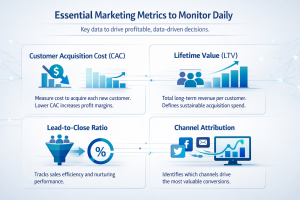
Essential Metrics to Monitor Daily
You absolutely cannot properly manage what you do not accurately measure. An integrated digital marketing ecosystem provides crystal-clear visibility into your most important key performance indicators. Therefore, tracking the correct metrics ensures continuous, highly profitable data-driven optimization.
It is crucial to verify your performance strictly against established industry benchmarks. Consequently, you must mercilessly discard any campaigns that fail to meet your minimum return thresholds.
- Customer Acquisition Cost (CAC): Monitor exactly how efficiently your campaigns generate new, paying business. Lowering this metric directly increases your profit margins directly.
- Lifetime Value (LTV): Measures the comprehensive, long-term revenue generated by each acquired client. This dictates exactly how much you can safely spend to acquire them.
- Lead-to-Close Ratio: Track the precise effectiveness of your automated nurturing sequences. Furthermore, this measures the efficiency of your internal sales team.
- Channel Attribution: Identify exactly which specific campaigns and platforms drive the most valuable traffic. This ensures you allocate your budget strictly to winning strategies.
Reviewing these specific metrics regularly will keep your integrated digital marketing ecosystem highly profitable. Consequently, executive leadership can allocate future marketing budgets with absolute confidence and strategic precision. Reliable data eliminates all guesswork from your marketing meetings.
Overcoming Common Integration Roadblocks
Adopting a completely new operational system always presents significant logistical challenges. However, extremely proactive planning mitigates most of these integration risks entirely. Internal resistance to change is frequently the most significant hurdle management teams face during this transition.
It is crucial to verify that your staff receives comprehensive, hands-on training immediately. An integrated digital marketing ecosystem only functions optimally if your people use it correctly. Therefore, invest heavily in extensive team onboarding and rigorous continuous education programs. This ensures maximum adoption rates and strictly minimizes daily operational disruptions.
Furthermore, historical data migration can seem incredibly daunting initially. Partnering with a specialized, highly experienced agency ensures a smooth, highly secure transfer of your valuable customer records. This approach effectively resolves the issue of lost, duplicated, or corrupted data during the complex move. Therefore, professional assistance is highly recommended for established businesses.
Conclusion: Securing Your Integrated Digital Marketing Ecosystem
Scaling a modern brand requires significantly more than just good intentions and fragmented software tools. It demands a flawless, highly interconnected approach to managing traffic, capturing leads, and closing sales. Therefore, building a fully integrated digital marketing ecosystem is the absolute most profitable strategic decision you can make this year. To understand how larger enterprises approach these tech shifts, review insights on authoritative platforms like Forbes or the Official Google Blog.
Stop losing precious revenue to disjointed campaigns, manual errors, and highly inefficient software stacks. Instead, centralize your entire operational effort, deploy powerful automation, and heavily leverage artificial intelligence immediately. Please check out our guide on AI for customer acquisition for deeper insights. Furthermore, review our posts on all-in-one CRM benefits, SEO and paid ads alignment, and WebView app development to complete your knowledge.
Are you completely ready to transform your disjointed marketing tactics into a powerful, unified growth machine? Contact Great North Digital today to perfectly secure your integrated digital marketing ecosystem and accelerate your sustainable business growth.