
Marketing today feels complex, fragmented, and difficult to scale. Businesses use multiple tools, platforms, and agencies, yet results often remain inconsistent. Therefore, companies now shift toward The 2026 Blueprint: Building a Fully Integrated Digital Marketing Ecosystem to unify their efforts.
When systems connect properly, businesses generate better leads, improve conversion rates, and create seamless customer journeys. At the same time, integrated marketing reduces wasted budgets and improves decision-making. As a result, companies achieve faster growth, stronger brand positioning, and long-term sustainability.
Agencies like Great North Digital follow this integrated model, combining strategy, automation, content, and performance marketing into one unified system.
What Is a Fully Integrated Digital Marketing Ecosystem?
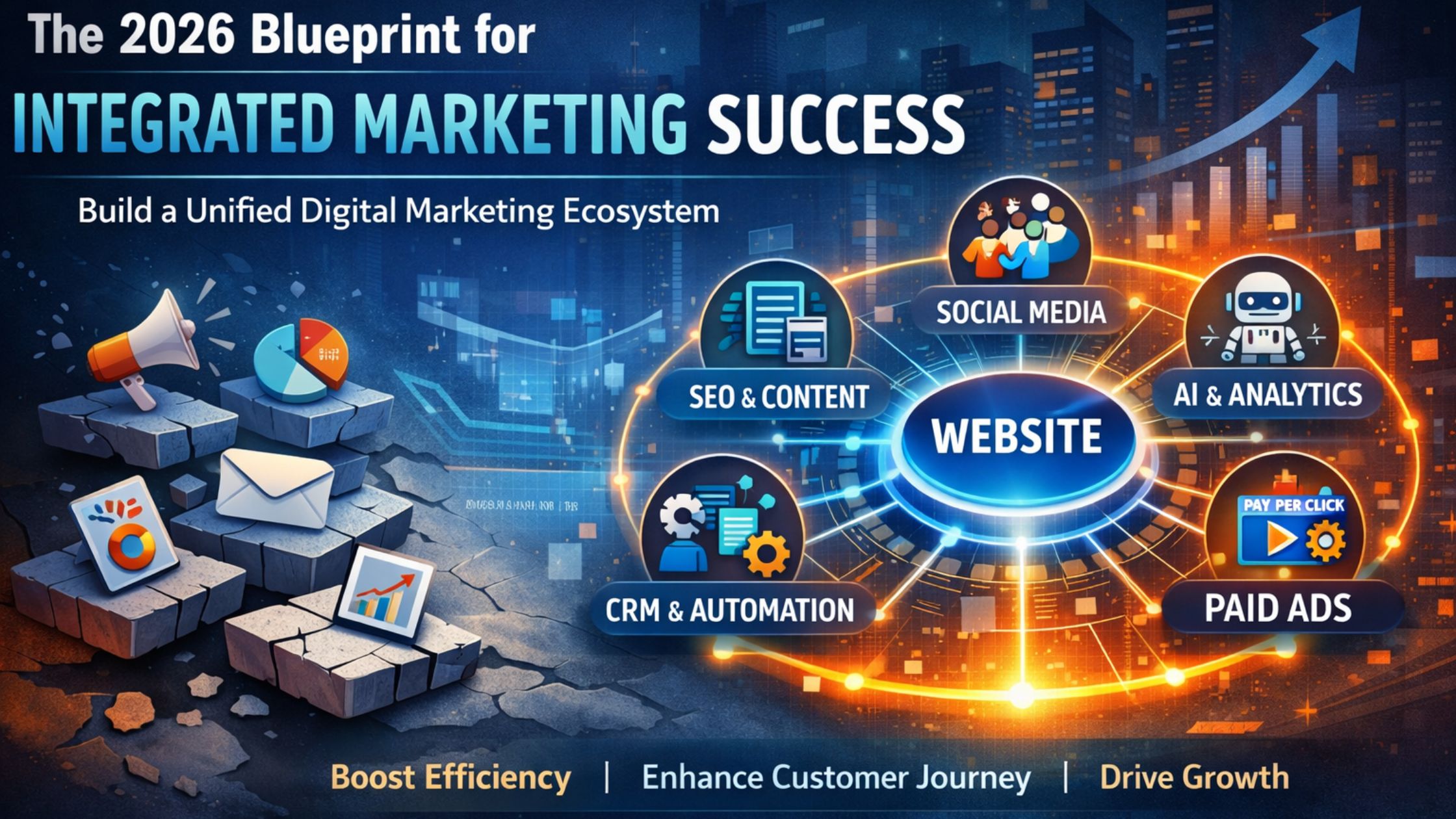
A fully integrated digital marketing ecosystem connects all marketing channels, tools, and data into one synchronized system. Instead of running isolated campaigns, businesses operate through a unified framework where every channel supports the same goal.
This ecosystem includes:
- Website and landing pages for conversions.
- SEO and content marketing for visibility.
- Social media management for engagement.
- Paid advertising campaigns for lead generation.
- CRM and automation tools for follow-up.
- Email and SMS marketing for nurturing.
- AI chatbots and outreach systems for scaling.
Therefore, every interaction becomes connected, measurable, and optimized for growth, stronger engagement, better customer journeys, improved efficiency, and higher long-term marketing performance. Learn more about AI Outreach for Scalable Customer Acquisition Growth.
Why Traditional Marketing Models No Longer Work
Traditional marketing relies on disconnected tools and manual processes. However, this approach creates inefficiencies that slow down growth.
A. Data Silos
Different platforms store separate data across marketing, sales, and service channels. As a result, businesses cannot track the full customer journey effectively or understand how users move from awareness to final conversion.
B. Delayed Follow-Ups
Manual systems have slow response times and often create unnecessary gaps between inquiry and action. Consequently, leads lose interest before conversion and may choose faster, more responsive competitors instead.
C. Inconsistent Messaging
Different teams communicate differently across ads, emails, websites, and sales calls. Therefore, brand trust decreases over time because customers receive mixed signals, confusing promises, and an unclear overall value proposition.
D. Poor ROI Tracking
Without integration, businesses cannot identify what actually works across channels, campaigns, and customer touchpoints. As a result, they waste budget, misread performance data, and struggle to scale profitably.
Therefore, companies must adopt a unified ecosystem to stay competitive in 2026 and improve efficiency, customer experience, data visibility, and long-term business growth.
The 2026 Blueprint: Building a Fully Integrated Digital Marketing Ecosystem
To build a successful ecosystem, businesses must follow a structured approach. Each layer plays a critical role in driving performance, efficiency, customer experience, scalability, and sustainable long-term growth.
1. Website as the Central Hub
Your website should act as the foundation of your ecosystem.
It must:
- Clearly communicate your value proposition.
- Capture leads effectively.
- Connect with CRM and automation tools.
- Support SEO and paid campaigns.
Additionally, a well-optimized website ensures faster load speed, better user experience, and higher conversion rates. Therefore, your website becomes the starting point of every marketing effort.
2. SEO and Content for Sustainable Growth
SEO drives long-term visibility and consistent traffic. However, content must align with user intent and business goals.
Key elements include:
- Keyword-optimized blog content.
- Technical SEO improvements.
- High-quality backlinks.
- On-page optimization.
Moreover, content marketing builds authority and trust over time. As a result, businesses generate organic leads without relying entirely on paid ads.
3. CRM and Automation for Lead Management
A CRM system acts as the backbone of the ecosystem.
It helps businesses:
- Capture and store leads.
- Automate follow-ups.
- Track customer interactions.
- Manage sales pipelines.
Additionally, automation tools ensure that no lead gets ignored. Therefore, businesses improve conversion rates and customer experience simultaneously.
4. Paid Advertising for Scalable Growth
Paid advertising accelerates visibility and lead generation.
Platforms include:
- Google Ads.
- Meta Ads (Facebook & Instagram).
- YouTube campaigns.
However, ads work best when integrated with landing pages, CRM, and analytics. As a result, businesses can track performance and optimize campaigns effectively.
5. AI and Automation for Efficiency
AI transforms marketing by improving speed and personalization.
Modern systems include:
- AI chatbots for instant responses.
- AI calling systems for lead qualification.
- Predictive analytics for better targeting.
Additionally, AI reduces manual workload and increases operational efficiency. Therefore, businesses can scale faster without increasing team size.
Benefits of an Integrated Marketing Ecosystem
A fully integrated system delivers measurable advantages across every stage of business growth.
- Better Lead Quality: Integrated systems attract and nurture high-intent leads. Therefore, conversion rates improve significantly.
- Faster Decision-Making: Real-time data helps businesses make smarter, faster, and more accurate decisions quickly.
- Improved Customer Experience: Seamless interactions create stronger trust, long-term loyalty, and better satisfaction among customers.
- Higher ROI: Connected systems reduce wasted spend, improve performance tracking, and increase overall marketing efficiency.
Therefore, integration directly impacts revenue growth and business stability by improving efficiency, reducing waste, strengthening customer journeys, and supporting smarter long-term strategic decisions.
Measuring Success in an Integrated Marketing Ecosystem
Building an ecosystem is important. However, measuring its performance is what ensures long-term success. Without proper tracking, businesses cannot understand which channels drive leads, conversions, and revenue most effectively.
Key metrics to monitor include:
- Website traffic trends and bounce rate performance insights.
- Lead conversion rates across different campaigns and channels.
- Cost per lead and customer acquisition efficiency tracking.
- Email open rates and response performance across campaigns.
- CRM pipeline progression and lead movement through stages.
- Return on ad spend and overall campaign profitability.
Additionally, regular reporting helps businesses identify weaknesses and optimize campaigns faster. Therefore, performance tracking turns a marketing ecosystem into a scalable and data-driven growth engine.

How Great North Digital Builds Integrated Ecosystems
Great North Digital follows a structured, results-driven approach to building marketing ecosystems.
A. Foundation Setup
Website development, branding, and social media setup create the core structure of the business’s digital presence, ensuring consistency, professionalism, visibility, and stronger audience engagement from the beginning.
B. SEO and CRM Integration
Search optimization combined with automation systems helps businesses attract qualified traffic, capture leads efficiently, organize customer data properly, and improve follow-up through smarter workflows.
C. Paid Campaign Launch
Strategic ad campaigns with tracking and optimization allow businesses to generate targeted traffic, measure campaign performance accurately, reduce wasted spend, and improve conversion opportunities.
D. Automation and Scaling
AI tools, retargeting, and performance tracking help businesses streamline operations, re-engage interested prospects, improve decision-making, and scale marketing efforts with greater speed and consistency.
Therefore, businesses move from setup to scaling with a clear roadmap, stronger execution, better coordination, measurable progress, and a more sustainable path to long-term growth.
Common Mistakes Businesses Must Avoid
Many businesses fail due to incorrect implementation strategies, poor coordination, weak planning, and disconnected execution. Avoid these common mistakes to build a stronger marketing ecosystem:
- No Conversion Path: Running ads without a conversion funnel.
- Weak Lead Management: Ignoring CRM and follow-up systems.
- Lack of Direction: Creating content without a strategy.
- Tool Overload: Using too many disconnected tools.
Instead, focus on integration, consistency, and data-driven decisions to improve efficiency, strengthen performance, and create a more scalable and profitable marketing system.
The Future of Digital Marketing in 2026
Digital marketing continues to evolve rapidly. However, integration remains the core success factor.
Future trends include:
- AI-driven personalization.
- Omnichannel marketing strategies.
- Advanced automation workflows.
- Data-driven decision-making.
Therefore, businesses that adopt integrated ecosystems early will gain a competitive advantage. Learn more about Hidden Costs of Fragmented Software Systems.
Why Integration Creates Long-Term Business Stability
Integration does more than improve short-term marketing performance. It also builds stronger long-term business stability by reducing dependence on isolated tactics and inconsistent workflows. When systems work together, teams collaborate more efficiently, customer journeys become smoother, marketing waste decreases significantly, and revenue forecasting becomes more accurate.
As a result, growth becomes easier to sustain over time. Moreover, businesses gain the flexibility to adapt quickly as platforms, customer behavior, and market conditions continue to evolve. Therefore, integration supports not only immediate marketing results but also long-term resilience and smarter business planning.

Conclusion
The future of marketing belongs to businesses that operate through connected systems. The 2026 Blueprint: Building a Fully Integrated Digital Marketing Ecosystem provides a clear path toward scalable and sustainable growth.
When your website, SEO, content, CRM, paid ads, and automation work together, you create a powerful growth engine. At the same time, you reduce inefficiencies and improve customer experience.
Great North Digital helps businesses implement this exact model through structured planning, advanced tools, and performance-driven strategies. Therefore, companies can move beyond fragmented marketing and build a system that delivers real results.
FAQs
1. What is a digital marketing ecosystem?
A digital marketing ecosystem is a connected system where all marketing channels and tools work together to drive leads, conversions, and growth.
2. Why is integration important in marketing?
Integration ensures consistent messaging, better data tracking, faster follow-ups, and improved ROI.
3. How long does it take to build a marketing ecosystem?
Most businesses can build a functional ecosystem within 8–12 weeks with proper planning and execution.
4. Can small businesses use this model?
Yes, small businesses can implement this approach gradually and scale over time with automation and strategy.