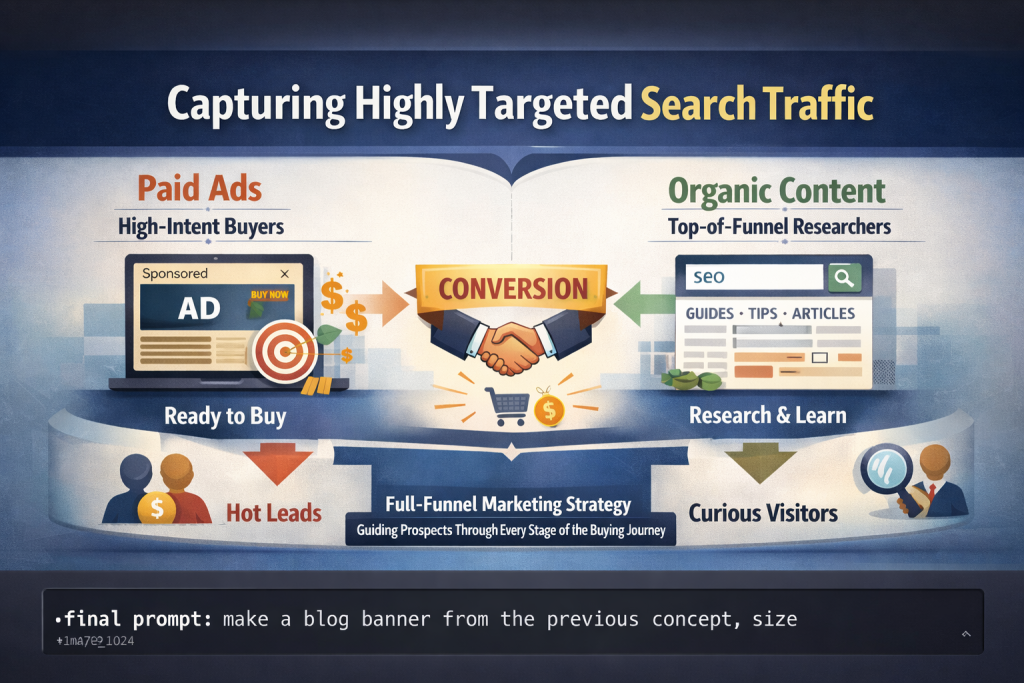
In today’s competitive digital landscape, businesses must move beyond isolated marketing strategies and disconnected campaign planning. Therefore, understanding Precision Targeting: Aligning High-Intent Paid Ads with Long-Term SEO becomes essential for driving both immediate conversions and sustainable growth in a more measurable, scalable, and cost-effective way for modern businesses.
While paid advertising delivers quick visibility, SEO builds long-term authority and organic trust over time. However, when businesses align both strategies with precision targeting, they create a powerful marketing ecosystem that maximizes ROI, improves customer acquisition efficiency, strengthens brand consistency, and supports smarter decision-making across every stage of the customer journey funnel.
Understanding High-Intent Paid Ads
High-intent paid ads target users who already show strong buying signals. For example, search queries like “buy now,” “best service near me,” or “pricing details” indicate readiness to convert.
Unlike broad awareness campaigns, high-intent ads focus on users at the bottom of the funnel. Therefore, they generate higher conversion rates and better returns on ad spend.
Platforms such as Google Ads and social media advertising enable businesses to target these users effectively. According to marketing automation insights, data-driven targeting helps deliver personalized messages and improves engagement significantly. As a result, businesses can capture demand at the exact moment customers are ready to act.
The Role of SEO in Long-Term Growth
While paid ads provide instant traffic, SEO builds a sustainable digital presence. It focuses on ranking content organically for relevant search queries over time.
SEO involves:
- Keyword optimization.
- Content creation.
- Technical improvements.
- Backlink strategies.
Therefore, businesses that invest in SEO create a steady flow of organic traffic without ongoing ad spend.
Moreover, SEO strengthens brand authority and trust. Users often perceive organic results as more credible compared to paid ads. Learn more about Integrated Marketing Success.
Why Alignment Between Paid Ads and SEO Matters
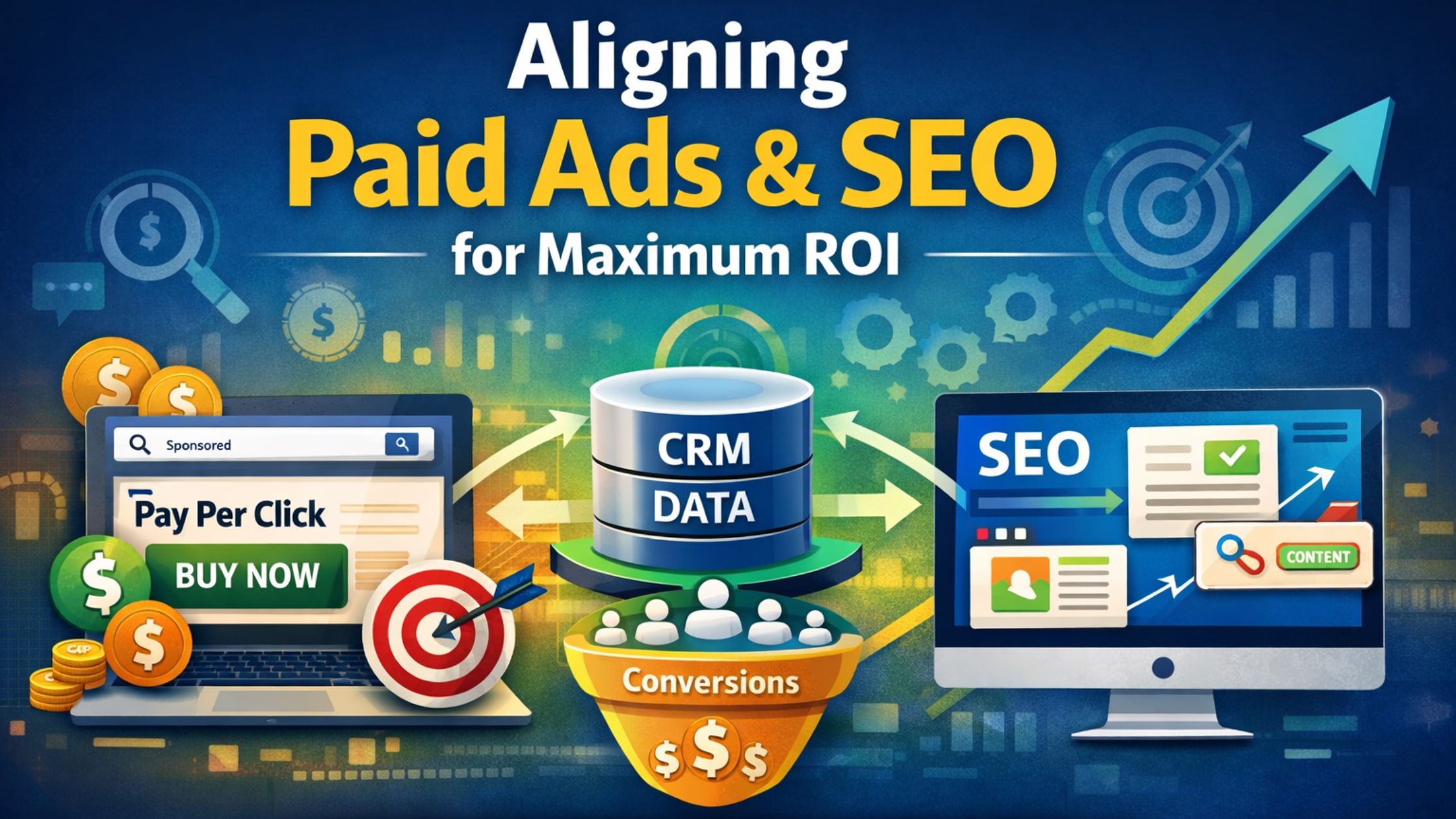
Many businesses treat paid ads and SEO as separate strategies. However, this approach limits their full potential. When both strategies align, they reinforce each other:
- Paid ads provide immediate data on high-performing keywords.
- SEO uses that data to build long-term ranking strategies.
- Both channels maintain consistent messaging across the funnel.
According to CRM and marketing integration research, disconnected systems create inefficiencies and revenue loss due to a lack of data sharing. Therefore, alignment ensures better targeting, improved efficiency, and higher ROI.
What Is Precision Targeting in Digital Marketing
Precision targeting focuses on reaching the right audience at the right time with the right message. Instead of targeting broad demographics, businesses use behavioral data, intent signals, and CRM insights.
For example:
- Retargeting users who visited a pricing page.
- Targeting lookalike audiences based on existing customers.
- Using CRM data to personalize ad campaigns.
CRM-driven advertising allows businesses to use first-party data for more effective targeting. As a result, campaigns become more relevant, personalized, and conversion-focused. Learn more about Integrated Marketing Success.
How an All-in-One CRM Enables Precision Targeting
To achieve Precision Targeting: Aligning High-Intent Paid Ads with Long-Term SEO, businesses need a centralized system.
An all-in-one CRM integrates:
- Customer data.
- Marketing automation.
- Paid advertising insights.
- SEO performance tracking.
For example, Great North Digital offers an all-in-one CRM solution that combines marketing automation, paid ads, SEO, and communication tools in one platform.
This integration allows businesses to:
- Track customer journeys from first click to conversion.
- Align messaging across paid and organic channels.
- Automate follow-ups and lead nurturing.
As a result, businesses eliminate data silos and improve targeting accuracy.

Key Benefits of Aligning Paid Ads with SEO
When businesses align paid ads with SEO, they create a more efficient and results-driven marketing system that improves visibility, targeting accuracy, conversions, and long-term growth.
- Improved Keyword Strategy: Paid ads reveal high-converting keywords instantly. Therefore, SEO teams can target them for organic rankings.
- Better Conversion Rates: Consistent messaging across ads and organic content builds trust. As a result, users are more likely to convert.
- Lower Customer Acquisition Costs: SEO reduces dependency on paid ads over time. Consequently, businesses achieve better ROI and cost efficiency.
- Enhanced Data-Driven Decisions: Unified CRM, ads, and SEO data improve decisions, campaign performance, and long-term strategy.
- Stronger Customer Experience: Aligned strategies create smoother, more personalized customer journeys.
Together, these benefits help businesses generate stronger results, better efficiency, and sustainable growth.
The Role of Automation in Precision Targeting
Automation plays a critical role in executing precision targeting strategies. It helps businesses manage campaigns efficiently and respond to customer behavior in real time.
Marketing automation tools:
- Trigger personalized email campaigns.
- Segment audiences based on behavior.
- Automate ad retargeting workflows.
- Track user engagement across channels.
Automation reduces manual effort while improving accuracy and scalability. Therefore, businesses can focus on strategy instead of repetitive tasks.
Best Practices to Align Paid Ads with SEO
To achieve better performance from both channels, businesses need a clear and strategic approach to alignment.
A. Define Shared Goals
Align both teams with common objectives such as lead generation and revenue growth. This ensures stronger collaboration, better planning, clearer priorities, and more measurable marketing outcomes.
B. Use Unified Data
Leverage CRM insights to guide both SEO and paid campaigns. This helps teams understand audience behavior, improve targeting accuracy, reduce guesswork, and make smarter strategic decisions.
C. Test and Optimize Continuously
Use paid ads to test keywords and messaging before scaling through SEO. This approach reveals what works faster, improves content direction, and strengthens long-term organic performance.
D. Maintain Consistent Messaging
Ensure landing pages, ads, and organic content reflect the same value proposition. This builds trust, improves brand clarity, creates smoother customer journeys, strengthens message consistency, and increases overall conversion potential.
E. Track Full Funnel Performance
Measure performance from first interaction to final conversion. This gives businesses clearer visibility into customer journeys, campaign impact, weak points, and overall return on investment.
As a result, businesses create a cohesive and efficient marketing strategy that improves collaboration, strengthens targeting, supports better decision-making, and drives more consistent long-term growth.

Conclusion
Precision targeting is no longer optional—it is a necessity for modern marketing success. Therefore, understanding Precision Targeting: Aligning High-Intent Paid Ads with Long-Term SEO helps businesses create a balanced strategy that drives both immediate and long-term results.
By combining paid ads with SEO and leveraging CRM-driven insights, businesses can improve targeting, increase conversions, and maximize ROI.
Companies like Great North Digital demonstrate how integrated systems can unify marketing efforts into a single powerful engine. Ultimately, businesses that align their strategies will achieve sustainable growth, while those relying on disconnected approaches will continue to struggle.